Photo by Photo by Wandr Owl on Unsplash
By Ani Bayburdyan
With Armenia preparing to host the 17th meeting of the Conference of the Parties to the Convention on Biological Diversity (CBD COP17), biodiversity conservation, sustainable development, and environmental governance are gaining renewed attention at both national and international levels. This landmark event provides an important opportunity to reflect on how economic development, including mineral resource extraction, can be reconciled with the long-term protection of biodiversity.
As a PhD student researching the impacts of mining on biodiversity and an Environmental Program Coordinator working on biodiversity conservation initiatives, I seek to connect scientific knowledge with practical approaches to sustainable natural resource management.
Participating in the SDG Academy course Mining and Materials for Sustainable Development Transformations has deepened my understanding of the complex relationships between mineral development, biodiversity, and sustainability, while strengthening my knowledge of international approaches to environmentally responsible resource management.
A Broader Perspective on Mining
Industrial-scale mining is regularly presented as creating constant conflicts between advancing economic development and safeguarding for environmental protection. However, the reality is far more complex; the key challenge is not simply related to the occurrence of mining activities, but rather linked to the capacities of societies to meet growing demands for mineral resources while guaranteeing the protection of biodiversity and making sure that resource development is exclusively guided by science, transparency, and long-term planning.
On the other hand, the global transition toward low-carbon economies and the expansion of renewable energy technologies are increasing the demand for minerals, which is creating new opportunities for production but at the same time raising critical questions related to sustainable resource development. Unlike conventional energy systems that rely on the continuous supply of fossil fuels, renewable energy technologies such as wind turbines and solar panels require significant quantities of minerals and metals for their production and infrastructure. Consequently, economic growth and environmental protection should not be viewed as having opposite objectives because sustainable development requires that both economic development and environmental protection follow an integrated approach to ensure that progress in one area does not compromise the objectives of the other. Consequently, economic growth and environmental protection should not be viewed as having opposite objectives because sustainable development requires that both economic development and environmental protection follow an integrated approach to ensure that progress in one area does not compromise the objectives of the other.
One of the key insights gained is that sustainable mining cannot function by mitigating impacts after their occurrence. Preventive measures should be integrated starting from the beginning of the process, such as environmental considerations at planning and design level, assessing resource needs during operations, developing appropriate closure strategies, and ensuring that ecosystem restoration is well implemented. Applying these measures will ensure that the sector converts from functioning under a reactive impact management approach, into a more proactive management approach while relying on preventative actions and long-term environmental stewardship.
This perspective is of particular importance to my research as it focuses on the impacts of mines on adjacent vegetation in Armenia. My ongoing research on vegetation communities in mining-affected areas highlights the importance of combining scientific research with practical approaches to ecosystem restoration. Moreover, understanding ecological resilience and species responses is essential for developing effective strategies for managing landscapes affected by mining.
Bringing Global Perspectives into Armenia’s Biodiversity and Mineral Resources
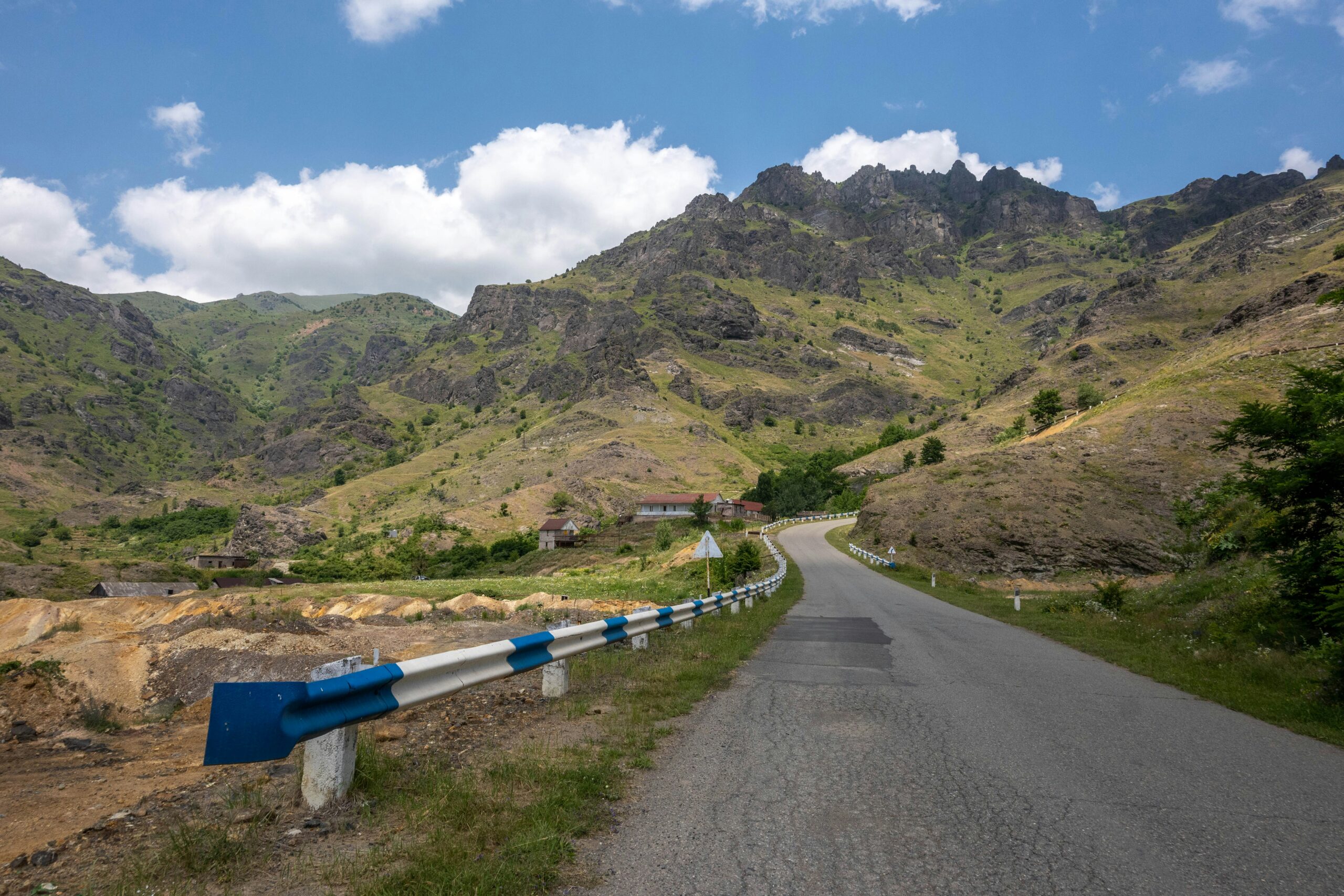
Armenia represents a unique example of a country where exceptional biodiversity values overlap with significant mineral resource development. Despite its relatively small territory (29,743 km²), Armenia is located within the Caucasus biodiversity hotspot, one of the 36 globally recognized biodiversity hotspots characterized by high species richness and endemism.
The country hosts more than 3,800 vascular plant species, 549 species of vertebrates and about 17,200 species of invertebrates, including numerous endemic and threatened species. Hundreds of species are included in the Red Book of Armenia, highlighting their global conservation importance. At the same time, approximately 13% of Armenia’s territory is designated as protected areas, reflecting the national efforts to preserve valuable landscapes, habitats, and species.
Armenia also includes important mineral activities as the sector remains one of the main contributors to industrial production and export activities in the country. Extraction comprises important deposits of copper, molybdenum, gold, and other metallic minerals.
As of December 31, 2024, the State Cadastre of Mineral Deposits and Occurrences of the Republic of Armenia (maintained by the Republican Geological Fund) recorded 998 deposits and geographically distinct sections of deposit
The main challenge for Armenia, thus, remains to strengthen the integration of biodiversity considerations into mineral resource management and environmental decision-making. It should be recognized at the center of environmental values as natural capital that supports ecosystem services, climate resilience, and human well-being. Integrating these considerations into economic planning, mining strategies, and ecosystem restoration approaches is essential for advancing sustainable development in Armenia.
Armenia’s Contribution to Global Biodiversity Solutions
As a researcher studying the impacts of mining on vegetation communities in Armenia and as an environmental practitioner engaged in biodiversity conservation initiatives, I see the integration of scientific evidence into decision-making as a critical pathway toward sustainable resource management. My experience has demonstrated that addressing the challenges associated with mining requires not only ecological assessments but also collaboration among scientists, policymakers, industry representatives, and local communities.
Armenia’s hosting of CBD COP17 provides an important opportunity to strengthen these connections and demonstrate how science-based approaches can support a more balanced relationship between mineral resource development and biodiversity conservation. By combining global knowledge with local ecological understanding, Armenia can contribute to advancing solutions where economic development and nature protection are not competing objectives, but interconnected elements of a sustainable future.

Ani Bayburdyan is a PhD Student in Environmental Sciences in the Republic of Armenia, where her research focuses on assessing the vulnerability of vegetation communities adjacent to tailings impoundments and exploring approaches to evaluate ecosystem recovery and restoration.
Alongside her academic research, Ani serves as Environmental Program Coordinator at Solution LLC and is Co-founder and Head of Environmental Programs at the “Arara” Center of Educational Initiatives NGO. She brings extensive experience in coordinating environmental projects and advancing biodiversity conservation and sustainable development initiatives in Armenia.
Ani has extensive experience collaborating with international development partners, government institutions, academic organizations, and local communities on environmental and sustainable development initiatives in Armenia. Her work bridges scientific knowledge and practical solutions, with a particular focus on biodiversity conservation, ecosystem recovery, nature-based solutions, environmental governance, and the implementation of global sustainability frameworks․