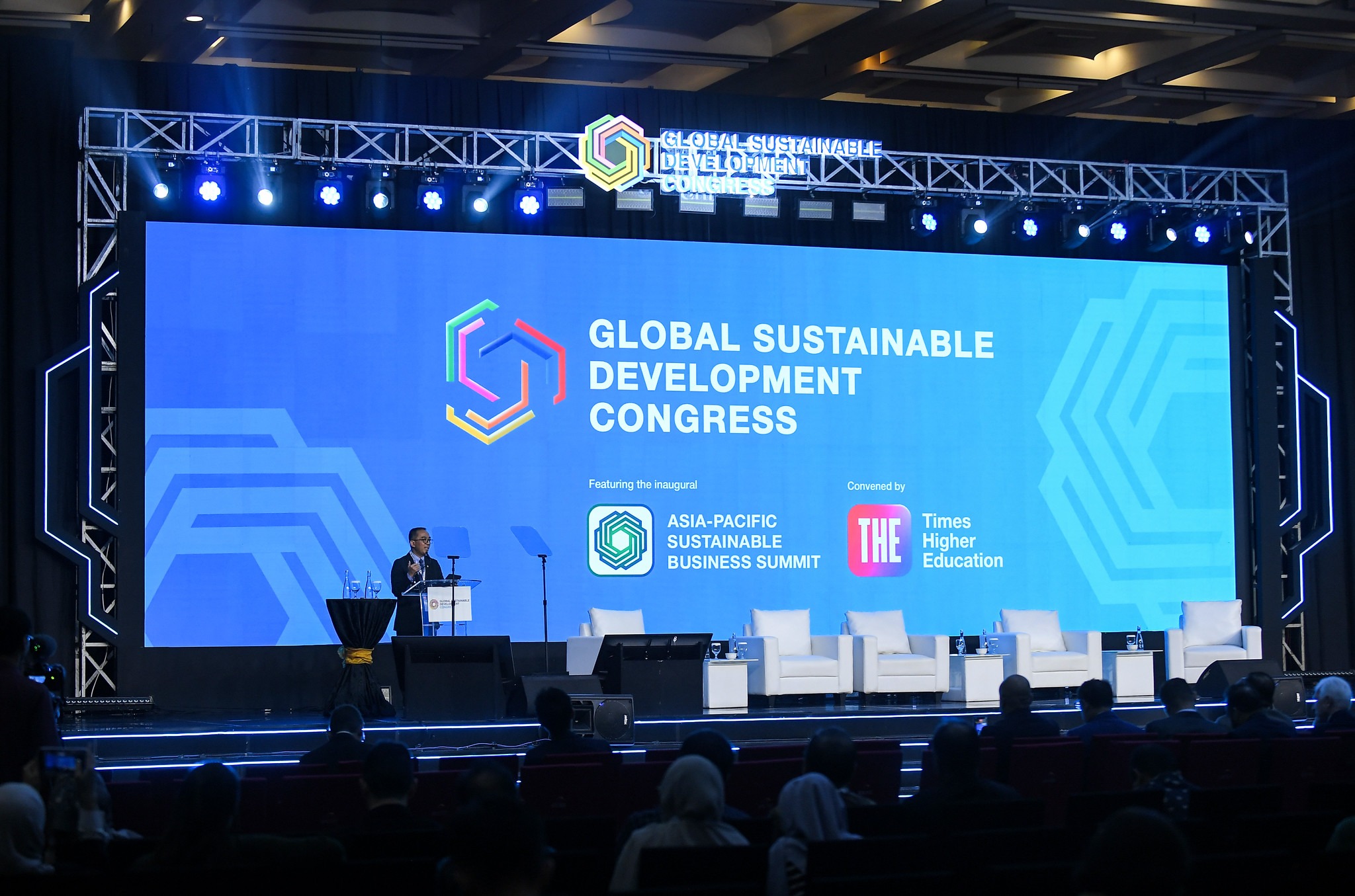
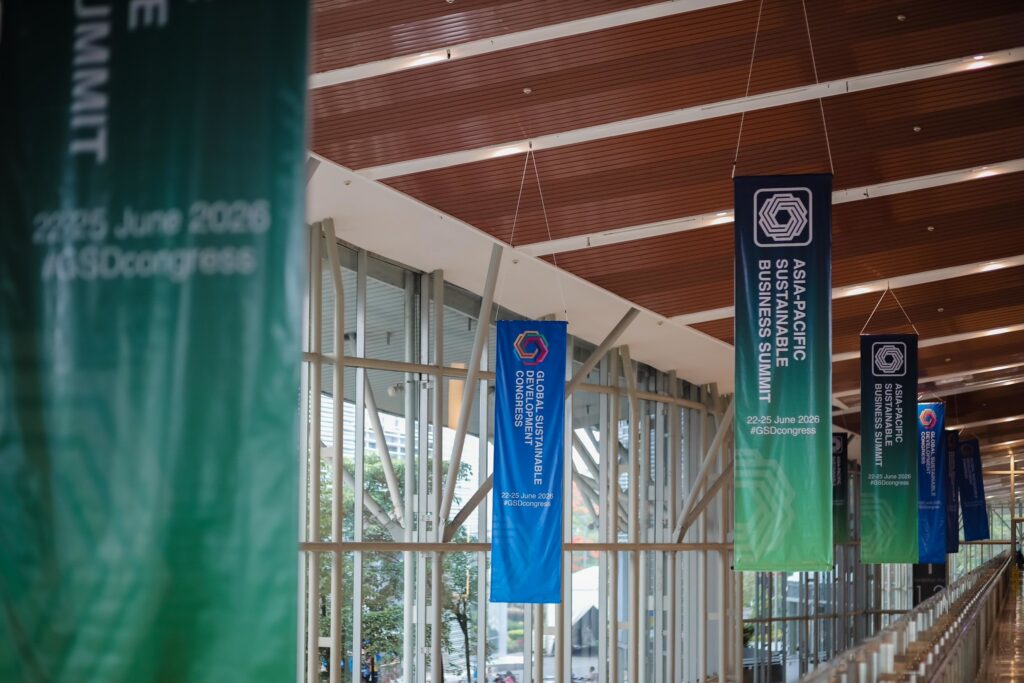
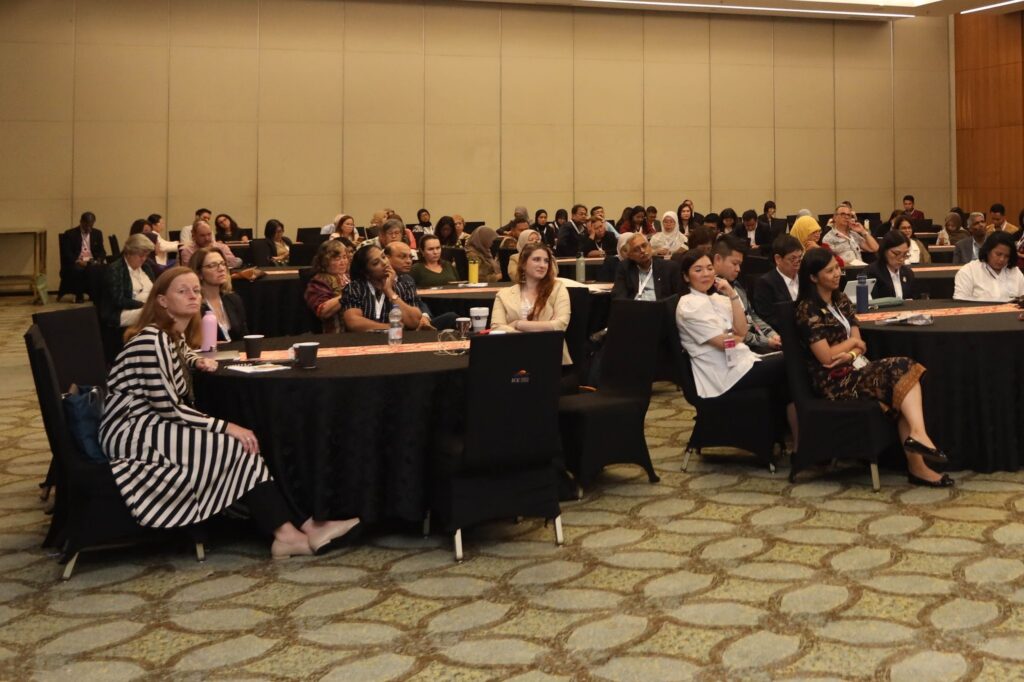
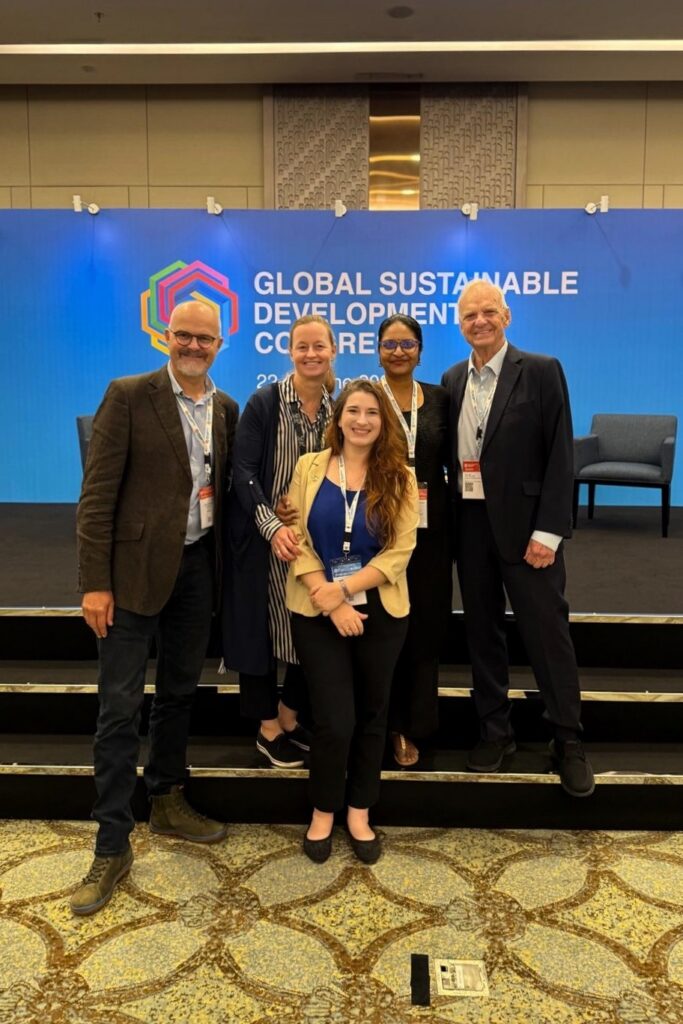
In June, I attended the Global Sustainable Development Congress (GSDC) in Jakarta. Convened by Times Higher Education (THE), the annual Congress brings together universities alongside governments, businesses, NGOs, investors, and other organizations working towards sustainable development.
The scope was ambitious. Too often, conversations about sustainable development take place within institutional or sectoral silos. Academics talk with academics. Businesses talk with businesses. Government bodies talk with government bodies. THE attempted something much more difficult: creating a space where these communities could come together around shared challenges.
That ambition extended beyond the Congress itself. Alongside GSDC were parallel summits focused on sustainable business, trade and economic development, sustainability skills, and sustainable finance. At first glance, the breadth of the program seemed disjointed. Why are events about education, business, skills, trade, and investment happening alongside one another?
When you stop to think about it, however, the connection is obvious. Higher education is the common thread.
A hub for sustainable development
Higher education institutions educate future professionals and leaders. They conduct research that informs public policy and drives innovation. They prepare graduates for changing labor markets while also providing lifelong learning through professional education, microcredentials, and executive programs. They partner with governments, collaborate with industry, support entrepreneurs, and engage communities.
In other words, universities are not simply educational institutions. They sit at the intersection of many of the conversations shaping sustainable development. (This was recently articulated in the UN’s “Consensus Statement on the Unique Position of Higher Education in the Pursuit of Solutions” to which SDSN contributed. Read it here.)
Recognizing that reality—and convening these different stakeholders accordingly—struck me as one of the Congress’s greatest strengths.
But bringing everyone into the same building is only the first step. As I moved between sessions, I found myself wondering whether the conversations themselves reflected the interconnectedness the event was trying to achieve. Thematic tracks often separated discussions that seemed naturally connected, while the parallel summits created opportunities for different sectors to gather without always creating space to wrestle collectively with the questions that linked them.
I don’t mean this as a criticism of THE’s ambition. If anything, it reflects the sheer difficulty of convening meaningful dialogue across communities that have traditionally operated independently. Bringing together diverse stakeholders is an achievement in itself. Creating conversations that move beyond coexistence towards genuine collaboration is a much harder task.
That challenge was evident not only between the different events, but within them as well. While the parallel events format separated some discussions that could have taken place together, other conversations were conflated in ways that I believe deserve more careful distinction. For instance, speakers in GSDC’s thematic track on “Education, gender, and inequality” often moved fluidly between questions of education access and questions of purpose. Both are important, but they are not the same.
Access asks who gets to participate in higher education. Purpose asks what higher education is actually for.
Of course, expanding participation must remain a priority. SDG 4 urges us to widen access and improve opportunities, providing a common framework for evaluating progress and holding systems accountable.
But access is also, perhaps, the easier conversation to have. Enrollment, completion, and equity can be measured. The purpose of higher education cannot.
Purpose is more difficult because it is fundamentally philosophical: What should students learn? What kinds of graduates should universities cultivate? Should higher education primarily prepare people for employment, or should it aim to help young people become thoughtful, engaged, and resilient members of society? Should higher education institutions be engines of research and innovation, anchors within their communities, expert policy advisors, or all of the above?
The answers to these questions are harder to measure, which may be one reason they receive less attention in large, multistakeholder fora. Yet they inevitably shape every other conversation about higher education.
Because, naturally, the answer depends on whom you ask. Governments look to higher education to support economic growth and evidence-informed policymaking. Employers seek graduates with relevant skills. Industry values research partnerships and innovation. Students and parents bring expectations shaped by aspirations for opportunity, personal growth, and social mobility. Communities expect universities to contribute to the public good.
None of these expectations are unreasonable, but neither are they identical. Until higher education institutions develop a clearer articulation of their own public purpose, they will continue to respond to each of these expectations without always explaining how they fit together.
Many functions, but a common purpose
I left convinced that before higher education can answer that question for others, it first needs to answer it for itself. What does higher education uniquely offer that no other institution can? How do teaching, research, innovation, community engagement, and lifelong learning fit together as parts of a coherent public mission?
As part of GSDC, I was invited to participate in a closed-door discussion between Times Higher Education and several UN-affiliated organizations around a deceptively simple question: What role should higher education play in the post-2030 agenda?
These are conversations that higher education must have with itself. Only then can we engage other partners with greater confidence—not to tell them what higher education should be, but to build a shared understanding of how higher education can contribute most effectively to a sustainable future.
The Global Sustainable Development Congress 2026 demonstrated that higher education sits at the intersection of many of the conversations shaping sustainable development. As the world looks toward the post-2030 agenda, our challenge is no longer convincing others that higher education belongs in these conversations. It is articulating, with greater clarity and confidence, why—and what only we can uniquely contribute.
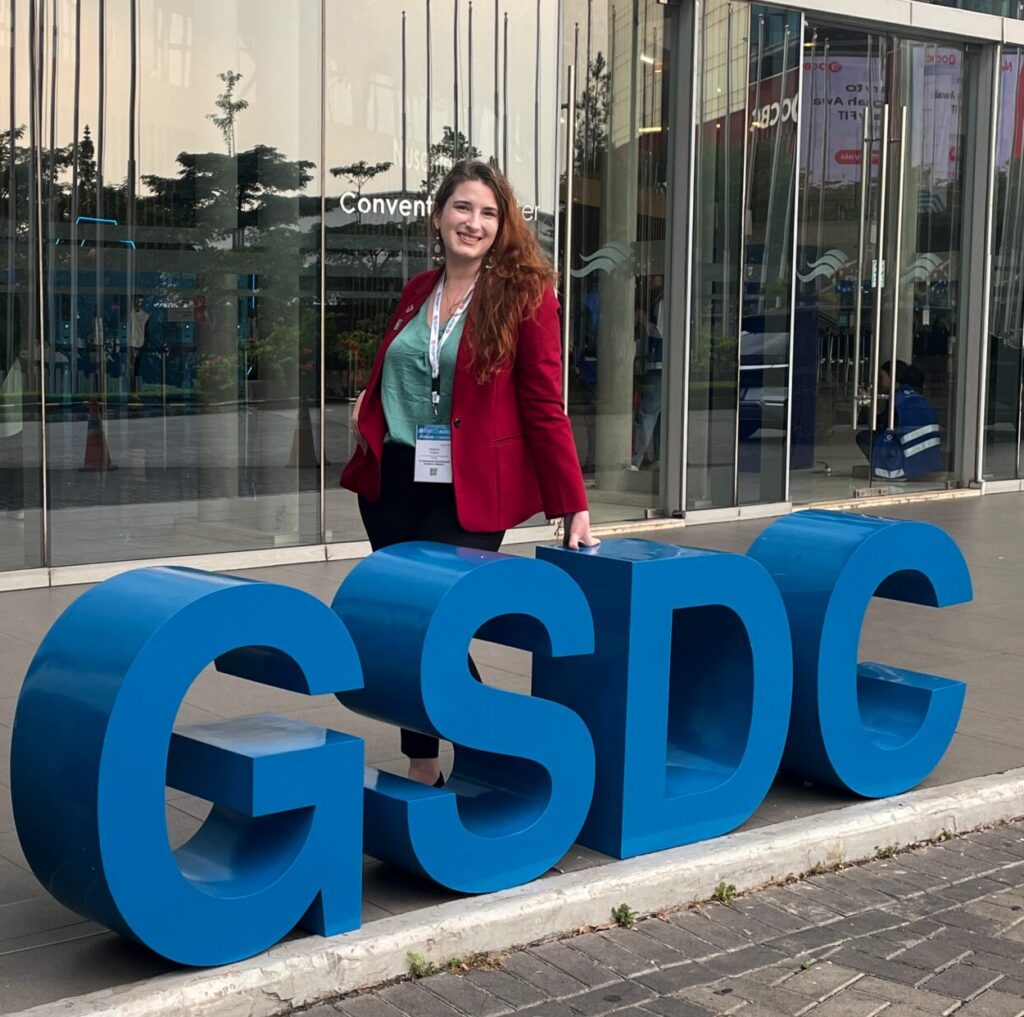
Shannon Kobran is the Head of Education and Training at the SDG Academy, with nearly two decades of experience in global development, higher education, and educational publishing. She has been with the SDG Academy since 2018. In 2021, she moved from New York to Malaysia to help establish the SDSN’s Asia Headquarters hosted at Sunway University in Kuala Lumpur.
Shannon holds a Master’s degree in International Educational Development from Teachers College, Columbia University, and a Bachelor’s degree in English Literature from Dickinson College, USA. She is also a PhD candidate at University College Dublin, researching the impact of public policy on corporate sustainability.