

By Alana Lewis
World Creativity and Innovation Day reminds us that creativity is the source for multifaceted and intersectional innovation. When applied to sustainable development, creativity becomes a bridge: linking social, environmental, and economic goals in ways that help to reshape societies for the future.
The Sustainable Development Goals are interconnected by design, and are strongest when we innovate with all of them in mind. Creative solutions, especially those emerging from communities themselves, show us what’s possible when we think in systems rather than silos.
To celebrate, let’s take a look at some of the most innovative examples of creativity in action, ideas that don’t just solve one problem individually but a host of them at once.
- Ciclovía: Reclaiming Streets, Reclaiming Community
SDG 3: Good Health | SDG 11: Sustainable Cities | SDG 13: Climate Action
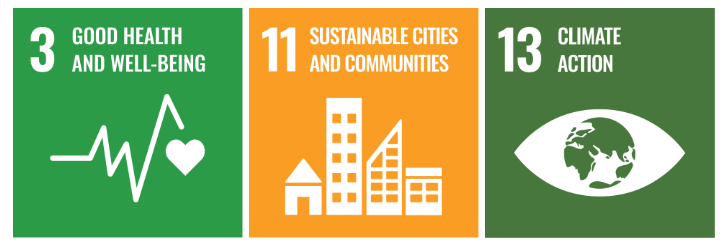
What began as a creative experiment in 1970s Bogotá has flourished and become a global model for imagining urban life. Ciclovía, meaning “cycleway” in Spanish, includes either a permanent bike path or the temporary closing of certain streets to vehicles for cyclists and pedestrians. Also known as Open Streets, Ciclovía reduces emissions, encourages physical activity, builds social connection, and makes public space truly public — the model has been adopted by hundreds of other cities seeking these positives as well. In innovating on technology that we already have, these creative car-free streets rethink existing urban infrastructure for sustainable development.
- Solar-Powered Irrigation: Powering Food and Livelihoods
SDG 2: Zero Hunger | SDG 7: Clean Energy | SDG 13: Climate Action
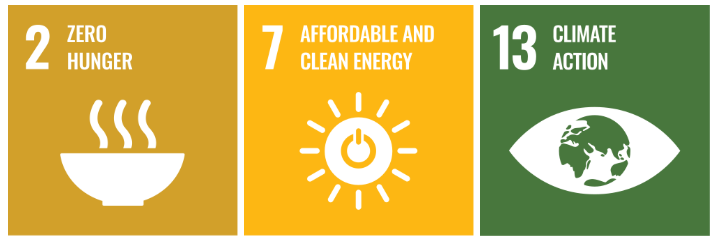
For farmers, solar-powered irrigation is changing the game. Smallholder farmers long relied on expensive, unreliable, and fossil fuel-based electricity access for irrigation, and also face the challenge of water scarcity. Solar-powered irrigation provides reliable power to farmers that also cuts costs while simultaneously reducing emissions. The transition gives farmers independence from volatile fuel markets, fostering resilience and sustainability while also now being able to diversify their crops and grow all year-round. Solar-powered irrigation is just one of the many innovative ways agriculture is being revolutionized for both sustainability and livelihood impact.
- BuildSkills Academy: Climate Creativity as a Pathway to Decent Work
SDG 4: Quality Education | SDG 8: Decent work and economic growth | SDG 9: Industry, innovation, and infrastructure | SDG 12: Responsible Consumption and Production
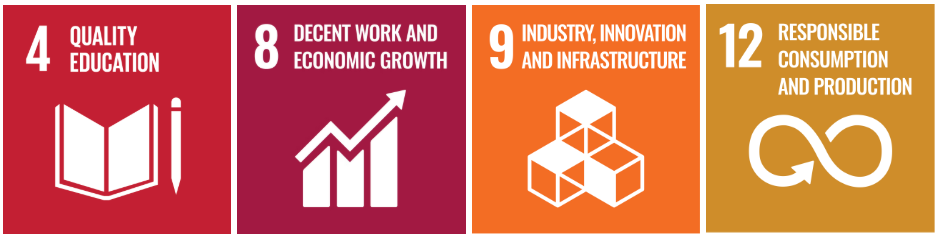
How do you construct jobs and an economy that can endure for a sustainable and digital future? BuildSkills Academy, a European Union-funded initiative, reimagines education by blending hands-on learning, digital skills, and entrepreneurship to modernize construction training, focusing on green and digital skills for the economies emerging today. The initiative bridges the gap between Vocational and Education and Training centers, construction companies, and trainees across Europe, offering a free, user-friendly digital platform for education providers to build on and improve their courses. BuildSkills Academy is one of many creative initiatives around the world making lifelong learning accessible and cross-sectorial.
- Food Forests: Regenerating Land and Community
SDG 2: Zero Hunger | SDG 11: Sustainable Cities | SDG 15: Life on Land
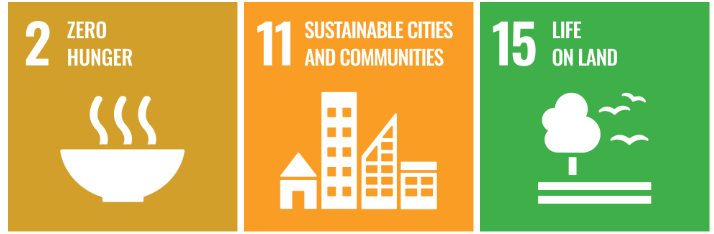
Food forests are different from community gardens — they mimic natural forest ecosystems while remaining sustainable, low-maintenance gardening systems. These forests incorporate layers of edible plants, from the canopy to the root crops, mirroring the vertical stacking of woodland ecosystems. From urban agriculture to educational settings, food forests provide fresh, free produce and community green space, all the while supporting soil health, biodiversity, and local pollinators. As a community-led solution to fight local food insecurity and benefit ecosystems, food forests take nature’s innovative and creative systems and replicate them.
- M-Pesa: Financial Innovation that Transformed a Nation
SDG 1: No Poverty | SDG 5: Gender Equality | SDG 8: Decent Work | SDG 9: Industry, Innovation, and Infrastructure | SDG 10: Reduced Inequalities
M-Pesa, a mobile phone-based money platform, has revolutionized financial services in Kenya and beyond. The platform allows users to store and transfer money without needing a bank account, part of the “mobile money” transition that has sought to improve financial inclusion. M-Pesa’s expansion has lifted two percent of households in Kenya out of poverty and given small businesses transaction efficiency and safety, and has especially been beneficial to women in giving them more economic agency to transition occupations from subsistence farming to business or retail. From enabling household financial resilience to empowering women with financial independence, M-Pesa and other players in the mobile money transition have built creative and innovative strategies for unlocking economic inclusion.
- Mobile Courts: Justice That Meets People Where They Are
SDG 5: Gender Equality | SDG 10: Reduced Inequalities | SDG 16: Peace, Justice, and Strong Institutions
Mobile courts provide legal services that would otherwise be inaccessible to vulnerable populations in remote or conflict-affected areas. Judges, lawyers, and prosecutors all travel to communities to help administer justice, strengthening trust in institutions and ensuring victims don’t have to travel to unfamiliar environments to testify. These courts are crucial in lessening case backlogs, bringing perpetrators to justice and reinforcing the rights of victims, especially in cases of gender-based violence. In a creative way of rethinking governance, these courts bring equal access to justice directly to those who need it most.
Creativity as a bridge
At the heart of creativity is integration — it is finding innovative links across fields, strengthening individual ideas into resilient and intersectional opportunities. Achieving the Sustainable Development Goals requires not thinking of them as separate, tunnel-focused goals but instead as goals that are inherently intertwined. Through more inclusive solutions, whether institutional or community-led, creativity accelerates progress across multiple SDGs at once and is the pathway to an innovative future.

Alana Lewis is an English and Digital Technologies and Emerging Media student at Fordham University. She is currently a Communications Intern at SDG Academy, helping to support communications efforts after having worked previously in marketing, digital media, and communications spaces. She has served as a copy editor for her university’s student newspaper The Fordham Ram, and is also part of the Fordham English Law Society. She also runs an uplifting news blog and social media initiative Pale Blue Home, where she shares positive news and developments happening around the world. In her free time, Alana is a reader, writer, and baker, and can always be found crafting something.